Gold Fever in Miño river
2024
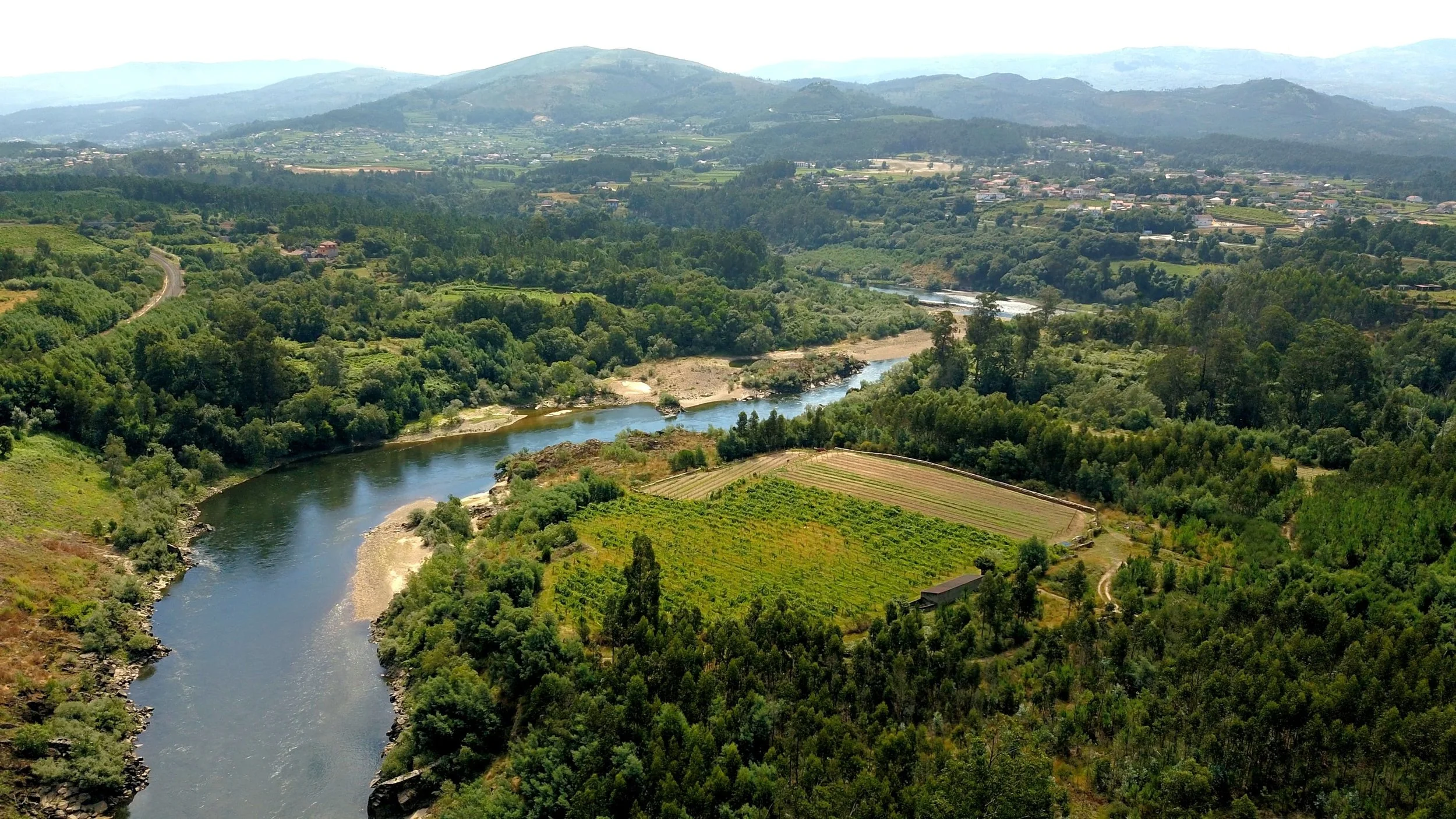
For centuries, the Miño River has carried more than water. Flowing between Spain and Portugal, its banks have preserved traces of an enduring human obsession: gold.
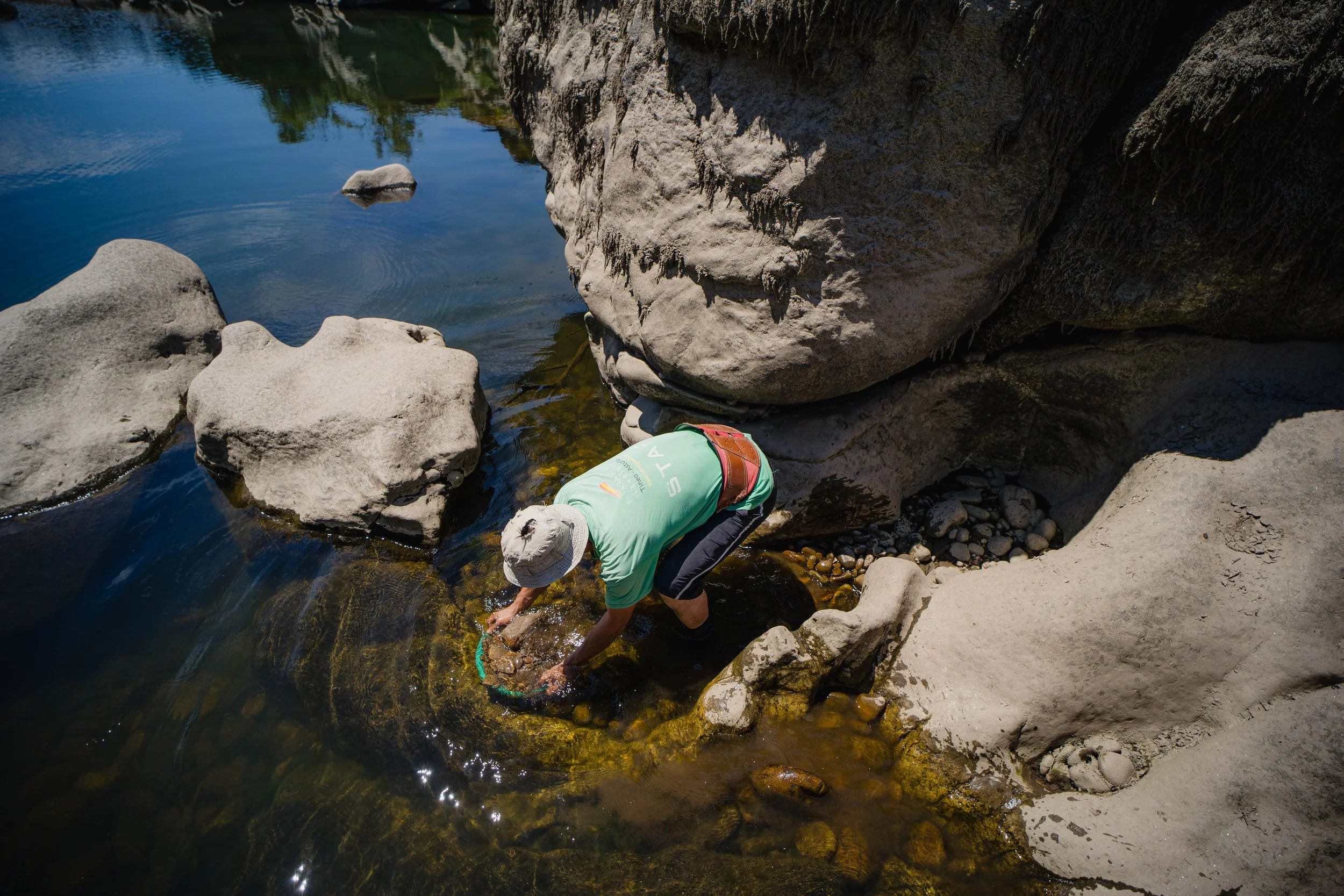
In a remote meander of the river, accessible only through muddy dirt tracks overgrown with vegetation, modern day prospectors continue a practice that dates back to Roman times. Small holes dug between river stones reveal the presence of gold flakes deposited by seasonal floods evidence that the so called “gold fever” never fully disappeared.
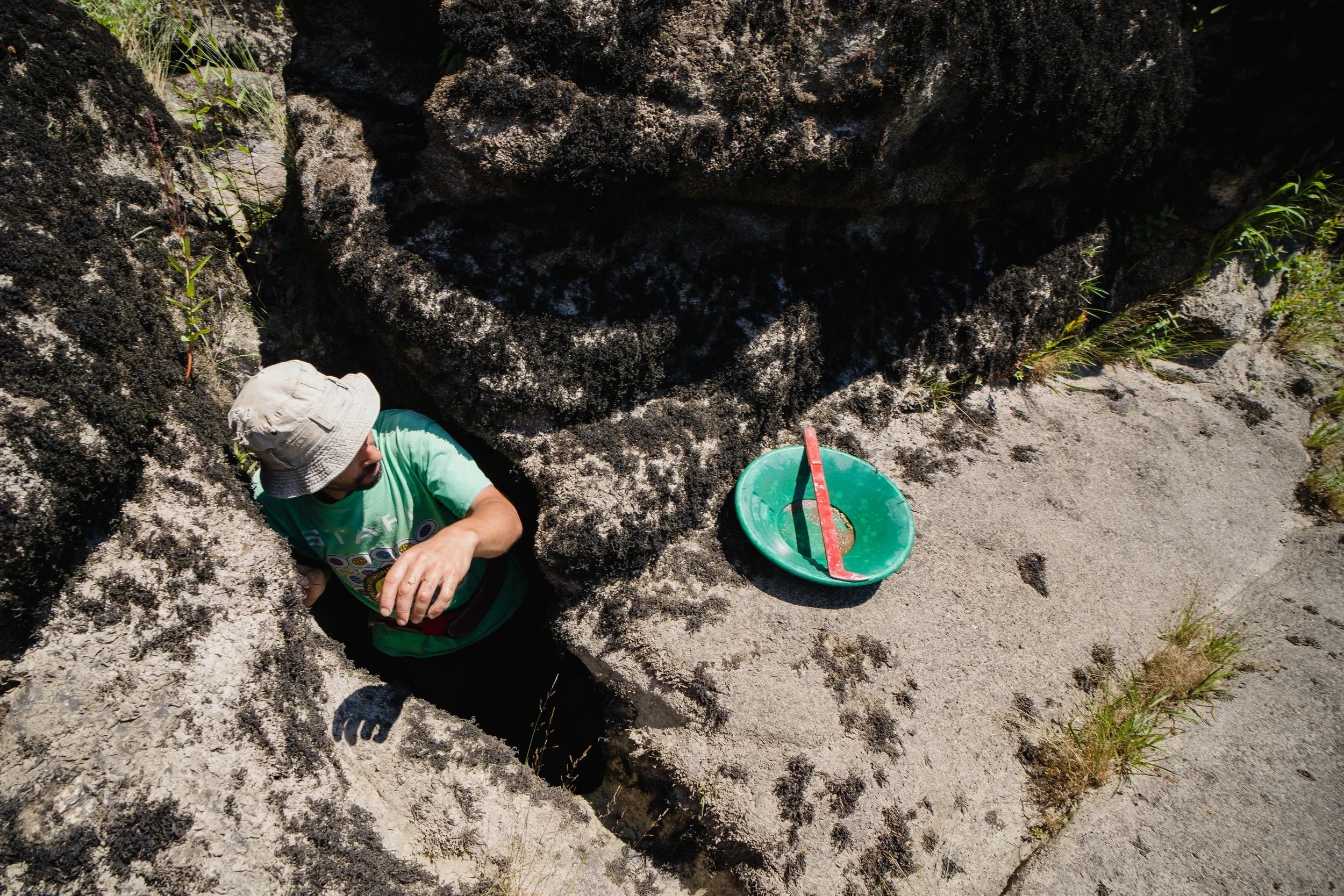
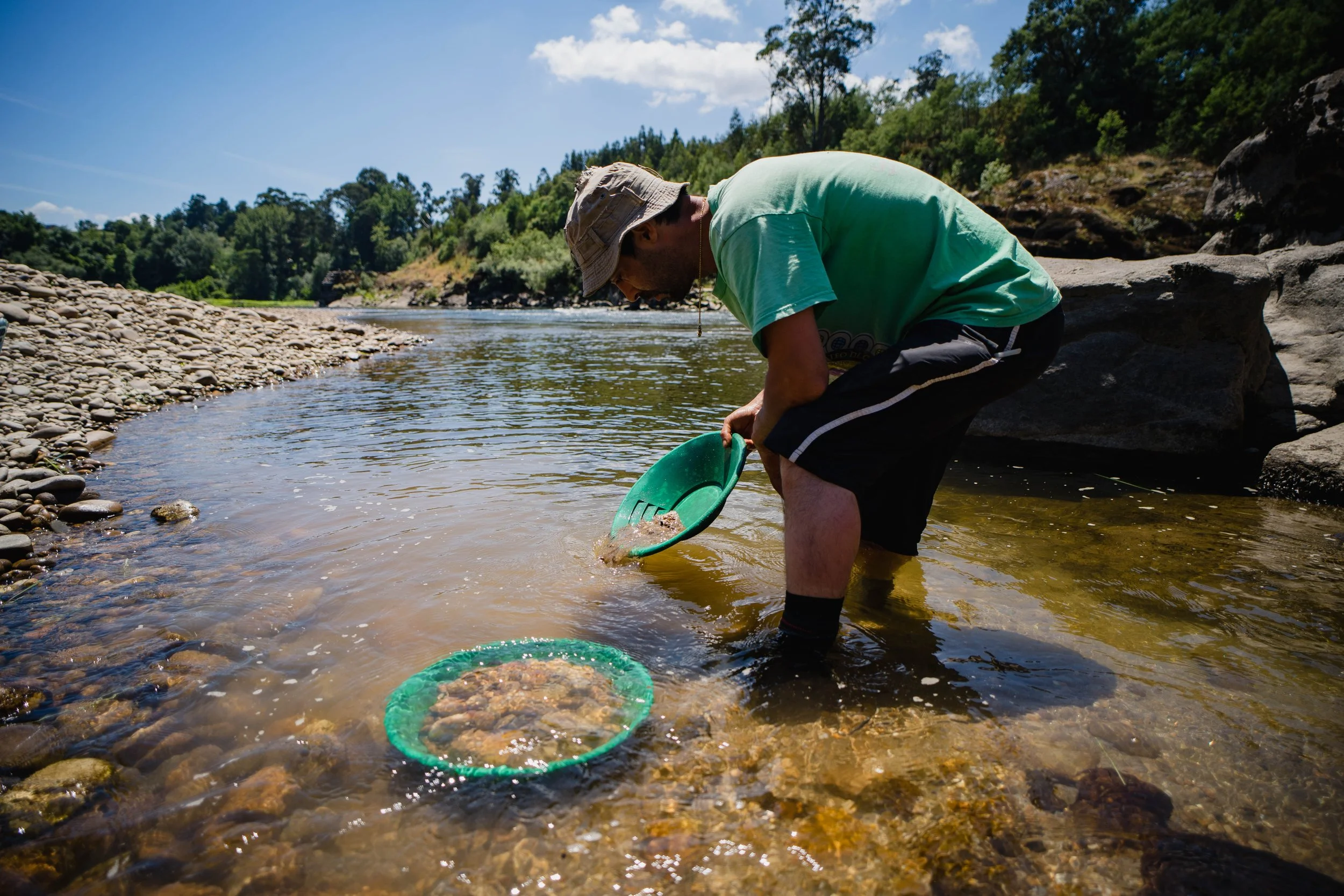
Today, gold panning in the Miño is strictly regulated. Prospectors are only allowed to use manual tools; even low-voltage water pumps are prohibited by law. The method remains labor intensive and slow. The upper layers of gravel brought by recent floods are carefully removed to reach older, more compact sediment, where fine gold particles settle. Some dig vertically toward the bedrock, while others adapt their technique to the changing conditions of the river.
One of them is Mario Fatanga, a Portuguese prospector based in Vigo. Standing on the Spanish bank, with a clear view of the river’s flow, he explains how unpredictable the Miño can be. “In five or ten minutes, the water level can rise by a meter,” he says. Having grown up just a few hundred meters away on the Portuguese side, Fatanga has witnessed both the dangers and the importance of the river. “People have drowned here. You have to be careful. But at the same time, this river gives us life.”
Around his neck, Fatanga wears a small gold nugget he found in northern Spain years ago. For him, gold prospecting is not a livelihood but an obsession. “It’s not about the money,” he says. “It’s the feeling of finding something forgotten, something no one else has touched.” Any financial gain is minimal, but the passion remains. He now combines prospecting with educational work, giving talks in schools in Spain and Portugal and explaining the historical roots of gold extraction.
Summer is the ideal season for panning. Lower water levels expose riverbanks that are inaccessible for most of the year, forcing prospectors to adapt daily to new conditions. Sometimes gold is found in river bends; other times, in cracks in the bedrock itself. The work is repetitive, meticulous, and uncertain.
The Miño’s auriferous history is well documented. Roman engineers extensively exploited the river basin, moving millions of cubic meters of earth and extracting hundreds of kilograms of gold. Historical texts from the 16th and 18th centuries describe gold grains the size of lentils, and even larger, recovered from its waters. The river’s very name may derive from Minium, a Latin term linked to the reddish sediments produced by ancient mining operations.
Even today, the river continues to attract interest. Geological studies conducted in the early 2000s confirmed the presence of significant quantities of gold within the Miño’s gravel beds, though industrial extraction remains controversial.
This story was published in Faro de Vigo and El Correo Gallego, in july 2024.